IoT Monetization Market Case Studies, and Use Cases, by Application (Retail, Industrial, Automotive & Transportation, Building & Home Automation, Consumer Electronics, Energy, Agriculture, and Healthcare) and Geography - Global Forecast to 2035


IoT monetization Market Summary
The global IoT monetization market is entering a high-growth phase as enterprises increasingly shift from simply deploying connected devices to generating measurable revenue from connected products, data, software, and digital services. The global IoT monetization market was valued at approximately USD 6–10 billion in 2025 and is projected to reach around USD 48–50 billion by 2035, registering a CAGR of 23%–24% during the forecast period
The growth of the IoT monetization market is being supported by the rapid proliferation of connected devices, enterprise digital transformation, cloud computing, 5G connectivity, edge computing, artificial intelligence (AI), and automation. Organizations are increasingly treating IoT-generated data as a commercial asset rather than merely an operational by-product. Manufacturers are introducing connected equipment-as-a-service models, automotive companies are monetizing vehicle data and software features, utilities are expanding smart-metering services, and retailers are using connected-device data to improve personalized customer engagement.
AI is becoming particularly important because it allows organizations to transform raw IoT data into predictive insights, automated decisions, and premium digital services. As businesses move toward recurring revenue models, IoT monetization is increasingly becoming a strategic component of product development, digital platforms, and customer lifecycle management.
Key Market Trends & Insights
The IoT monetization market is characterized by a transition from connectivity-led business models toward data-, software-, and outcome-driven monetization. Subscription-based services remain important because they provide predictable recurring revenue, while usage-based and outcome-based pricing are gaining traction among industrial and enterprise customers.
North America remains a leading regional market because of the early adoption of cloud platforms, connected products, 5G, enterprise IoT, and advanced analytics. The region also benefits from the presence of major technology and cloud companies that are developing integrated IoT platforms and monetization ecosystems.
Asia Pacific is expected to be the fastest-growing region through 2035. China, Japan, India, South Korea, and Southeast Asian economies are investing heavily in smart manufacturing, connected infrastructure, intelligent transportation, smart cities, and industrial automation. Growing digitalization and expanding connected-device deployments are creating a large installed base from which new monetization opportunities can emerge.
Cloud-based IoT platforms represent a dominant technology direction because they allow companies to scale device management, analytics, billing, customer management, and data services without maintaining extensive physical infrastructure. One current market estimate indicates that cloud-based deployment accounted for about 62% of the market in 2025.
AI and automation are also changing the economics of IoT services. AI-based predictive maintenance, intelligent pricing, anomaly detection, automated customer segmentation, and autonomous operational optimization enable companies to package IoT intelligence as a premium service rather than selling connectivity alone.
Market Size & Forecast
- Base year market size: Approximately USD 6–10 billion in 2025.
- Forecast value by 2035: Approximately USD 48–50 billion by 2035.
- CAGR: Approximately 23%–24% during the forecast period.
- Growth factors: Rising connected-device deployments, cloud and edge computing, 5G connectivity, subscription models, data monetization, AI-enabled analytics, and enterprise digital transformation are expected to remain the primary growth catalysts.
The significant expansion expected over the next decade demonstrates that IoT monetization is moving beyond traditional connectivity and billing into a broader digital-business framework. Companies increasingly want to monetize the continuous flow of data generated by machines, vehicles, appliances, infrastructure, and industrial assets.
IoT monetization market Top 10 key takeaway
- The global IoT monetization market is projected to grow from approximately USD 6–10 billion in 2025 to nearly USD 48–50 billion by 2035.
- The market is expected to register a CAGR of approximately 23%–24% during the forecast period.
- North America remains a leading market because of advanced IoT infrastructure and strong enterprise technology adoption.
- Asia Pacific is expected to record the fastest growth through 2035.
- Subscription-based and usage-based models are becoming increasingly important revenue mechanisms.
- Data monetization is emerging as a strategic opportunity across industrial, automotive, retail, healthcare, and energy applications.
- Cloud-based platforms are supporting scalable IoT billing, analytics, device management, and customer engagement.
- AI is increasing the commercial value of IoT data by enabling predictive and automated services.
- Industrial IoT, connected vehicles, smart cities, and connected consumer products represent major monetization opportunities.
- Companies are increasingly moving toward outcome-based and recurring-revenue models instead of one-time hardware sales.
Product Insights
The product landscape of the IoT monetization market includes subscription-based services, usage-based services, outcome-based solutions, data monetization platforms, advertising and sponsorship models, licensing and franchising, and associated IoT platforms and services. Subscription-based models represent one of the most commercially established approaches because they provide recurring revenue and allow providers to continuously improve products after deployment. This model is particularly relevant for connected equipment, fleet management, industrial monitoring, smart-home services, and enterprise software.
Usage-based monetization is gaining importance as organizations seek to align pricing with actual device utilization, data consumption, machine operating hours, transactions, or service consumption. Industrial equipment manufacturers, for example, can charge customers according to machine usage rather than requiring a large upfront purchase. Such models can lower adoption barriers while creating recurring revenue opportunities for suppliers.
Outcome-based monetization represents another important emerging category. Under this model, customers pay based on measurable results such as reduced energy consumption, improved equipment availability, higher production efficiency, or lower maintenance costs. AI and predictive analytics make these models more practical because providers can continuously measure performance and verify outcomes.
Data monetization is also becoming a strategic product category. Companies are developing platforms that aggregate, clean, analyze, and package IoT data for internal users, partners, customers, and third parties. Increasingly sophisticated AI models can extract additional commercial value from this data by identifying trends, forecasting demand, and generating automated recommendations.
Technology / Component Insights
Cloud computing remains a foundational technology in the IoT monetization market because it provides scalable infrastructure for connected-device management, data storage, analytics, application hosting, billing, and customer lifecycle management. Cloud platforms enable IoT providers to support millions of connected endpoints while integrating monetization functions into existing enterprise systems.
Edge computing is becoming increasingly important where low latency, data privacy, or continuous connectivity is required. By processing IoT information closer to the device, edge platforms can reduce data-transfer requirements and support real-time monetization services. This is particularly valuable in manufacturing, logistics, autonomous transportation, energy infrastructure, and smart-city applications.
AI and machine learning represent the next major layer of innovation. AI algorithms can analyze device behavior, predict equipment failures, identify customer usage patterns, optimize pricing, and recommend additional services. Generative AI is also expected to improve IoT platform interfaces by allowing business users to query operational data using natural language and generate automated reports or recommendations.
5G connectivity is strengthening the market by supporting higher device density, lower latency, and more reliable communication. As private 5G networks expand across factories, ports, warehouses, campuses, and utilities, IoT monetization providers can develop new connectivity-linked service models.
Automation is simultaneously reducing the operational cost of monetization. Automated provisioning, billing, usage tracking, contract management, customer onboarding, and revenue assurance can enable providers to manage complex IoT ecosystems more efficiently. Over the longer term, digital twins, edge AI, autonomous agents, and real-time analytics are expected to create additional monetization opportunities.
Application Insights
Industrial applications represent one of the strongest opportunities in the IoT monetization market because manufacturers are increasingly converting equipment, machinery, and operational data into recurring digital services. Connected machinery enables suppliers to offer predictive maintenance, remote monitoring, performance optimization, and equipment-as-a-service models. These offerings can generate recurring revenue while improving customer productivity.
Automotive and transportation applications are also expanding rapidly. Connected vehicles generate information about driving behavior, vehicle condition, location, energy consumption, and usage. Automakers and mobility providers can use this information to develop connected services, fleet-management solutions, usage-based insurance, predictive maintenance, and personalized digital features.
Retail and consumer IoT provide another major opportunity. Smart appliances, connected security systems, wearable devices, and intelligent home platforms can generate subscription revenue through premium features, cloud storage, monitoring, personalization, and data-driven services.
Healthcare organizations are increasingly exploring remote monitoring and connected medical devices, while energy providers are using smart meters and connected infrastructure to improve demand management and introduce data-driven services. Smart-city deployments also create monetization opportunities through connected parking, transportation, environmental monitoring, and infrastructure services.
Regional Insights
North America is expected to remain a leading region in the IoT monetization market, supported by high enterprise IoT penetration, advanced cloud infrastructure, widespread digital transformation, and strong investment in AI and connected technologies. The United States has a particularly strong ecosystem of cloud providers, software companies, telecom operators, industrial technology firms, and IoT platform developers. These factors support the commercialization of IoT data and connected services.
Europe is developing steadily as industrial automation, smart manufacturing, energy efficiency, connected mobility, and data governance become strategic priorities. Germany and France are particularly important because of their industrial bases and investments in connected production, automotive technologies, and digital infrastructure.
Asia Pacific is expected to demonstrate the fastest growth. China and Japan have large industrial and technology ecosystems, while India and Southeast Asian countries are expanding digital infrastructure and smart-city initiatives. Growing adoption of connected devices and cloud platforms provides a substantial foundation for future monetization models.
- North America: Strong enterprise IoT adoption, cloud infrastructure, and technology ecosystem.
- Europe: Growth supported by industrial IoT, smart mobility, energy efficiency, and digital regulation.
- Asia Pacific: Fastest-growing region due to industrialization, connectivity, and smart infrastructure.
- China and Japan: Major APAC markets driven by manufacturing automation and connected technologies.
- Emerging economies: Increasing IoT deployments are creating new opportunities for subscription and data-based services.
Country-Specific Market Trends
China is becoming an important growth engine for the IoT monetization market, supported by smart manufacturing, connected infrastructure, industrial automation, and government-backed digitalization. The China market is projected to expand at approximately 31%–33% CAGR through 2035 in recent market estimates. Japan is expected to grow at approximately 33% CAGR, supported by smart infrastructure, industrial automation, robotics, AI integration, and connected-device adoption.
In North America, the United States remains the largest opportunity because of advanced cloud adoption, enterprise software penetration, connected vehicles, industrial IoT, and strong technology investment. Canada is expected to record more moderate growth of approximately 13%–14% CAGR, while Mexico is positioned for faster expansion at approximately 35% CAGR as manufacturers and enterprises increase IoT infrastructure investments.
Germany is benefiting from industrial digitalization and Industry 4.0 initiatives, with its IoT monetization market projected to grow at approximately 33% CAGR through 2035. France is also expanding as manufacturers, utilities, retailers, and smart-infrastructure operators adopt connected services and data-driven business models, with growth estimated at approximately 31% CAGR.
- China: Approximately 31%–33% CAGR, supported by industrial IoT and smart manufacturing.
- Japan: Approximately 33% CAGR, driven by robotics, AI, automation, and smart infrastructure.
- United States: Leading North American market with strong cloud, automotive, and enterprise IoT adoption.
- Canada and Mexico: Increasing demand for connected infrastructure and industrial applications.
- Germany and France: Strong European markets supported by industrial automation and digital transformation.
Key IoT monetization market Company Insights
The competitive landscape includes major cloud, software, industrial automation, telecom, and IoT platform companies. Microsoft is expanding IoT monetization capabilities through cloud, AI, data analytics, and enterprise software integration. Amazon Web Services supports connected-device ecosystems through cloud infrastructure, IoT services, analytics, and machine learning. IBM focuses on enterprise IoT, AI, automation, and data-driven industrial solutions.
Cisco Systems combines connectivity, security, edge computing, and IoT management, while Siemens is positioned strongly in industrial IoT, digital manufacturing, automation, and digital-twin technologies. SAP integrates IoT data with enterprise resource planning and business processes, supporting data-driven commercial models.
Oracle provides cloud and data-management capabilities relevant to IoT monetization, while PTC focuses on industrial IoT, connected products, product lifecycle management, and digital transformation. Ericsson and Honeywell are also important participants through connectivity, industrial automation, connected operations, and enterprise IoT solutions. These companies are increasingly combining AI, cloud, edge, automation, and analytics to convert connected-device deployments into recurring digital revenue streams.
- Cloud providers: Expanding scalable IoT platforms, analytics, and AI capabilities.
- Industrial technology firms: Monetizing connected machinery, software, and operational data.
- Enterprise software vendors: Integrating IoT information with business applications.
- Telecom companies: Creating connectivity-linked IoT and usage-based services.
- Platform providers: Developing recurring subscription, licensing, and data monetization models.
Recent Developments
The IoT monetization market is experiencing continued innovation as vendors integrate AI-powered analytics with connected-device platforms. Cloud providers are increasingly combining IoT management with machine learning, edge computing, data lakes, and generative AI to help customers transform operational data into commercially valuable insights.
Another major development is the expansion of outcome-based and usage-based industrial models. Equipment manufacturers are increasingly exploring equipment-as-a-service arrangements in which customers pay according to machine usage, availability, productivity, or achieved outcomes. This approach creates longer customer relationships and recurring revenue opportunities.
Partnerships between telecom operators, cloud providers, industrial automation companies, and software vendors are also becoming increasingly important. These collaborations combine connectivity, IoT platforms, AI, cybersecurity, billing, and analytics into integrated offerings that reduce the complexity of commercializing connected services.
Market Segmentation
The IoT monetization market can be segmented by product, technology/component, application, and region. By product, the market includes subscription-based, usage-based, outcome-based, advertising and sponsorship, data monetization, and licensing and franchising models. By technology/component, the ecosystem includes IoT platforms and solutions, software, services, cloud computing, edge computing, AI, analytics, connectivity, and supporting billing and revenue-management systems. By application, major areas include industrial, automotive and transportation, healthcare, retail, energy and utilities, smart cities, agriculture, smart homes, telecommunications, and consumer IoT. Geographically, the market spans North America, Europe, Asia Pacific, Latin America, and the Middle East & Africa, with North America maintaining strong commercial maturity and Asia Pacific delivering rapid expansion. Recent market research similarly identifies subscription, usage-based, outcome-based, data monetization, advertising, and licensing as major monetization models.
- By Product: Subscription-based, usage-based, outcome-based, data monetization, advertising, and licensing.
- By Technology/Component: IoT platforms, software, services, cloud, edge, AI, analytics, and connectivity.
- By Application: Industrial, automotive, healthcare, retail, energy, smart cities, agriculture, and consumer IoT.
- By Region: North America, Europe, Asia Pacific, Latin America, and Middle East & Africa.
- Growth opportunity: Data-driven, AI-enabled, recurring-revenue business models are expected to expand fastest.
Conclusion
The IoT monetization market is evolving from a connectivity-focused ecosystem into a broader digital revenue opportunity in which data, software, AI, automation, and connected products become commercial assets. The market is projected to expand from approximately USD 6–10 billion in 2025 to USD 48–50 billion by 2035, representing a CAGR of 23%–24%.
AI will be one of the most important forces shaping this expansion. AI-enabled analytics can convert large volumes of IoT data into predictive insights, automated decisions, personalized services, and measurable business outcomes. At the same time, cloud and edge computing will allow companies to process connected-device information at scale, while 5G and private networks will support new real-time applications.
For businesses, the strategic importance of IoT monetization extends beyond generating incremental revenue. Subscription and outcome-based models can strengthen customer relationships, improve product lifecycle economics, and create continuous feedback loops between products and users. Companies that successfully combine IoT data with AI, automation, cybersecurity, cloud platforms, and flexible pricing are likely to capture a larger share of the market through 2035.
FAQs
1. What is the market size of the IoT monetization market?
The global IoT monetization market was valued at approximately USD 6–10 billion in 2025 and is projected to reach around USD 48–50 billion by 2035, according to recent market estimates.
2. What is the growth rate of the IoT monetization market?
The IoT monetization market is expected to grow at a CAGR of approximately 23%–24% during the forecast period to 2035. Growth is being driven by connected-device expansion, cloud adoption, 5G, AI, data monetization, and recurring digital-service models.
3. What are the key drivers of the IoT monetization market?
Key drivers include increasing IoT device deployments, enterprise digital transformation, subscription-based business models, cloud and edge computing, AI-powered analytics, 5G connectivity, industrial automation, connected vehicles, smart cities, and the growing commercial value of IoT-generated data.
4. Which region is leading the IoT monetization market?
North America is a leading region because of its mature IoT ecosystem, strong cloud infrastructure, enterprise technology adoption, and presence of major technology companies. Asia Pacific, however, is expected to be the fastest-growing region through 2035 due to rapid digitalization, industrial automation, smart-city development, and increasing connected-device adoption.
5. Who are the key companies in the IoT monetization market?
Major companies operating across the IoT monetization market include Microsoft, Amazon Web Services, IBM, Cisco Systems, Siemens, SAP, Oracle, PTC, Ericsson, and Honeywell. These companies are focusing on IoT platforms, cloud computing, AI, edge analytics, industrial automation, connectivity, and recurring-revenue solutions.
To speak to our analyst for a discussion on the above findings, click Speak to Analyst
 Exclusive indicates content/data unique to MarketsandMarkets and not available with any competitors.
Table of Contents
1 Introduction (Page No. - 12)
1.1 Objectives of the Study
1.2 Market Definition
1.3 Study Scope
1.3.1 Markets Covered
1.3.2 Years Considered for the Study
1.4 Currency
1.5 Limitation
1.6 Stakeholders
2 Research Methodology (Page No. - 16)
2.1 Research Data
2.1.1 Secondary Data
2.1.1.1 Key Data From Secondary Sources
2.1.2 Primary Data
2.1.2.1 Key Data From Primary Sources
2.1.2.2 Key Industry Insights
2.1.2.3 Breakdown of Primaries
2.2 Market Size Estimation
2.2.1 Bottom-Up Approach
2.2.2 Top-Down Approach
2.3 Market Breakdown & Data Triangulation
2.4 Research Assumptions
2.4.1 Assumptions
3 Executive Summary (Page No. - 24)
4 Market Overview (Page No. - 29)
4.1 Introduction
4.2 Market Segmentation
4.2.1 Market, By Application
4.2.2 Market, By Geography
4.3 Market Evolution
4.4 IoT Monetization Model
4.5 Market Dynamics: IoT Monetization Market
4.5.1 Drivers
4.5.1.1 Increasing Internet Connectivity
4.5.1.2 Increased Use of Smartphones and Other Connected Devices
4.5.1.3 Growing Adoption of Cloud Platforms
4.5.2 Restraints
4.5.2.1 Lack of Common Communication Standards Across Platforms
4.5.2.2 Lack of Power-Efficient Devices
4.5.3 Opportunities
4.5.3.1 Significant Number of Investments in the Market
4.5.3.2 Significant Government Funding Worldwide for R&D in Iot
4.5.4 Challenges
4.5.4.1 Ensuring the Security and Privacy of the Data Collected
5 Industry Trends (Page No. - 38)
5.1 Introduction
5.2 Key Trends in the IoT Monetization Market
5.3 Porter’s Five Forces Analysis
5.3.1 Bargaining Power of Suppliers
5.3.2 Bargaining Power of Buyers
5.3.3 Threat of New Entrants
5.3.4 Threat of Substitutes
5.3.5 Intensity of Competitive Rivalry
6 IoT Monetization Market, By Application (Page No. - 45)
6.1 Introduction
6.2 Promising Applications for IoT Monetization
6.2.1 Retail
6.2.1.1 IoT in Retail: Case Study
6.2.1.2 Use Cases of IoT in Retail Applications
6.2.2 Industrial
6.2.2.1 IoT in Industrial: Case Study
6.2.2.2 Use Cases of IoT in Industrial Applications
6.2.3 Automotive & Transportation
6.2.3.1 IoT in Automotive & Transportation: Case Study
6.2.3.2 Use Cases of IoT in Automotive & Transportation Applications
6.2.4 Agriculture
6.2.4.1 Use Cases of IoT in Agriculture Applications
6.2.5 Energy
6.2.5.1 IoT in Energy: Case Study
6.2.5.2 Use Cases of IoT in Energy Applications
6.2.6 Building & Home Automation
6.2.6.1 IoT in Building & Home Automation: Case Study
6.2.6.2 Use Cases of IoT in Building & Home Automation Applications
6.2.7 Consumer Electronics
6.2.7.1 Use Cases of IoT in Consumer Electronics Applications
6.2.8 Healthcare
6.2.8.1 IoT in Healthcare: Case Study
6.2.8.2 Use Cases of IoT in Healthcare
6.2.9 Others
6.2.9.1 Use Cases of IoT in Other Applications
6.2.10 Case Study: Smart City (Barcelona, Spain)
7 Geographical Analysis (Page No. - 65)
7.1 Introduction
7.2 Geographical Analysis of IoT Monetization
7.2.1 North America
7.2.2 Europe
7.2.3 Asia-Pacific (APAC)
7.2.4 Rest of the World (RoW)
8 Competitive Landscape (Page No. - 68)
8.1 Introduction
8.2 Competitive Scenario
8.2.1 New Product Launches
8.2.2 Partnerships
8.2.3 Agreements & Collaborations
8.2.4 Acquisitions & Expansions
9 Company Profile (Page No. - 74)
(Overview, Financial*, Products & Services, Strategy, and Developments)
9.1 Introduction
9.2 PTC, Inc.
9.3 International Business Machine Corp.
9.4 General Electric Co.
9.5 SAP SE
9.6 Cisco Systems, Inc.
9.7 Amdocs Ltd.
9.8 Intel Corp.
9.9 Oracle Corp.
9.10 Google Inc.
9.11 Microsoft Corp.
9.12 Key Innovators
*Details Might Not Be Captured in Case of Unlisted Companies
10 Appendix (Page No. - 105)
10.1 Insights of Industry Experts
10.2 Discussion Guide
10.3 Knowledge Store: Marketsandmarkets’ Subscription Portal
10.4 Introducing RT: Real-Time Market Intelligence
10.5 Available Customization
10.6 Related Reports
List of Tables (14 Tables)
Table 1 Major Impact of Intensity of Competitive Rivalry and Bargaining Power of Suppliers on the Overall IoT Monetization Market
Table 2 Market, By Application, 2013–2022 (USD Billion)
Table 3 Market for Retail Applications, By Region, 2013–2022 (USD Million)
Table 4 Market for Industrial Applications, By Region, 2013–2022 (USD Million)
Table 5 Market for Agriculture Applications, By Region, 2013–2022 (USD Million)
Table 6 Market for Energy Applications, By Region, 2013–2022 (USD Million)
Table 7 Market for Building & Home Automation Applications, By Region, 2013–2022 (USD Million)
Table 8 Market for Consumer Electronics Applications, By Region, 2013–2022 (USD Million)
Table 9 Market for Healthcare Applications, By Region, 2013–2022 (USD Million)
Table 10 Market, By Region, 2013–2022 (USD Billion)
Table 11 New Product Launches, 2016
Table 12 Partnership, 2016
Table 13 Agreements & Collaborations, 2016
Table 14 Acquisitions & Expansions, 2015–2016
List of Figures (46 Figures)
Figure 1 Overview of the Micromarkets Covered
Figure 2 Global IoT Monetization Market: Research Design
Figure 3 Market Size Estimation Methodology: Bottom-Up Approach
Figure 4 Market Size Estimation Methodology: Top-Down Approach
Figure 5 Data Triangulation
Figure 6 Market, 2013–2022 (USD Billion)
Figure 7 Market for Consumer Electronics Expected to Grow at the Highest Rate Between 2016 and 2022
Figure 8 North America Held the Largest Share of the Market in 2015
Figure 9 Region-Wise Market Size for Top 2 IoT Monetization Applications, 2015
Figure 10 Geographical Scope of IoT Monetization
Figure 11 Market Evolution of IoT Monetization
Figure 12 IoT Monetization Model
Figure 13 Increased Internet Connectivity Would Enhance the Growth of the Market
Figure 14 Percentage of Households With Internet Access and Individuals Using the Internet, 2015
Figure 15 Shipments of Smartphones, 2012–2017
Figure 16 IoT Monetization: Porter’s Five Forces Analysis, 2015
Figure 17 Market: Porter’s Five Forces Analysis
Figure 18 Core Competencies Likely to Help the Suppliers to Maintain A High Bargaining Power
Figure 19 Medium Impact of the Bargaining Power of Buyers Due to the Increase in the Number of Suppliers in the Market
Figure 20 High Capital Requirement Poses as A Major Challenge for New Entrants
Figure 21 Medium Impact of Threat of Substitutes on the Market
Figure 22 High Intensity of Competitive Rivalry Due to the Presence of A Significant Number of Players in the Market
Figure 23 Market for Consumer Electronics Applications Likely to Grow at the Highest Rate During the Forecast Period
Figure 24 Geographic Snapshot: Market in APAC to Grow at the Highest Rate During the Forecast Period
Figure 25 Market Share, By Region, 2015
Figure 26 Companies Adopted New Product Launches as the Key Growth Strategy Between 2013 and 2016
Figure 27 Market Evaluation Framework—New Product Launches Fueled Market Growth Between 2013 and 2016
Figure 28 Battle for Market Share in the Market: New Product Launches and Partnerships Were the Key Strategies
Figure 29 Geographic Revenue Mix of Major Players
Figure 30 PTC, Inc.: Company Snapshot
Figure 31 PTC, Inc.: SWOT Analysis
Figure 32 IBM Corp.: Company Snapshot
Figure 33 IBM: SWOT Analysis
Figure 34 General Electric Co.: Company Snapshot
Figure 35 General Electric: SWOT Analysis
Figure 36 SAP SE: Company Snapshot
Figure 37 SAP SE: SWOT Analysis
Figure 38 Cisco Systems, Inc.: Company Snapshot
Figure 39 Cisco Systems, Inc.: SWOT Analysis
Figure 40 Amdocs Ltd.: Company Snapshot
Figure 41 Amdocs Ltd.: SWOT Analysis
Figure 42 Intel Corp.: Company Snapshot
Figure 43 Oracle Corp.: Company Snapshot
Figure 44 Google Inc.: Company Snapshot
Figure 45 Microsoft Corp.: Company Snapshot
Figure 46 Marketsandmarkets Knowledge Store: Semiconductors & Electronics Industry Snapshot
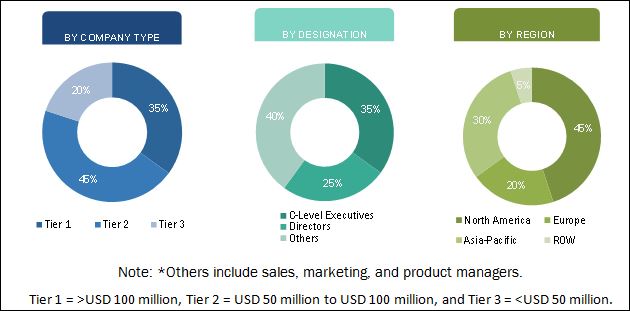
The research methodologies include the use of primary and secondary data. Both, top-down and bottom-up approaches have been used to estimate and validate the size of the market as well as of the other dependent submarkets in the overall IoT monetization market. Key players in the market have been identified through secondary research. The secondary sources include references from IEEE Internet of Things, IoT Journal, International Telecommunication Union (ITU), Consumer Electronics Association, Global Retail Marketing Association, Planet Retail, Marklines Co., Ltd. (Automotive Industry Portal), The European Automobile Manufacturers' Association (ACEA), and Society of Indian Automobile Manufactures (SIAM), among others. The research methodology includes the study of the annual and financial reports of the top market players and extensive interviews for key insights with industry leaders such as CEOs, VPs, directors, and marketing executives. All the percentage shares and breakdowns have been determined by using secondary sources and verified through primary sources. All possible parameters that affect the markets covered in this research study have been accounted for, viewed in extensive detail, verified through primary research, and analyzed to get the final quantitative and qualitative data. The breakdown of the profiles of primaries has been depicted in the figure below:
To know about the assumptions considered for the study, download the pdf brochure
The value chain of the IoT monetization market includes cloud platform providers, solution & service providers for IoT, hardware device manufacturers, and software vendors. The major companies that are part of the value chain include PTC, Inc. (U.S.), IBM Corp. (U.S.), Intel Corp. (U.S.), Cisco Systems, Inc. (U.S.), General Electric Co. (U.S.), Oracle Corp. (U.S.), Google Inc. (U.S.), Microsoft Corp. (U.S.), SAP SE (Germany), Infosys Ltd. (India), Tata Consultancy Services (India), Robert Bosch GmbH (Germany), and Amdocs Ltd. (U.S.), among others.
Major Market Developments
- In September 2016, SAP SE, Nippon Telegraph, and Telephone Corporation (Japan) partnered to develop an IoT solution for connected transportation safety solutions for collecting and analyzing vehicle-related data with NTT’s hitoe, a jointly developed sensing fabric by Toray Industries, Inc. (Japan) and NTT.
- In June 2016, PTC unveiled an agile software solution, Agileworx, at the business event called LiveWorx, held in Massachusetts. This solution would help the product engineering teams to innovate their products and would improve time-to-market.
- In June 2016, Cisco collaborated with IBM Corp. (U.S.) to provide solutions on IoT. With this collaboration, businesses and organizations in remote and autonomous locations would be able to tap the combined power of IBMs Watson IoT and business analytics technologies and Cisco’s edge analytics capabilities.
Target Audience:
- Communication network providers
- IoT device manufacturers (OEMs)
- IoT software and solution vendors
- Distributors and traders
- Research organizations and consulting companies
- IoT associations, organizations, forums, and alliances
- Government bodies such as regulating authorities and policy makers
- Venture capitalists, private equity firms, and startup companies
“The study answers several questions for the target audiences, primarily which market segments to focus on in the next two to five years for prioritizing efforts and investments.”
Report Scope:
In this report, the IoT monetization market has been segmented on the basis of:
IoT monetization Market, by Application:
- Retail
- Healthcare
- Automotive & Transportation
- Industrial
- Building & Home Automation
- Agriculture
- Energy
- Consumer Electronics
- Others
IoT monetization Market, by Geography:
- North America
- Europe
- Asia-Pacific (APAC)
- Rest of the World (RoW)
Critical questions which the report answers
- What are the major use-cases in IoT monetization?
- Which are the major companies using IoT as a tool for monetization?
- Which countries would lead the IoT monetization market?
Available Customizations:
With the given market data, MarketsandMarkets offers customizations according to the company’s specific needs. The following customization options are available for the report:
Company Information
- Detailed analysis and profiling of additional market players (up to five)
Company Profiles
- Detailed analysis of the major companies present in the IoT monetization market













Growth opportunities and latent adjacency in IoT Monetization Market